How To Get Around in Budapest
2021-04-16 17:54:52
TICKETING (BKK)
Public transport tickets can be purchased from any of the BKK vending machines or offices for 350Ft for a single journey (~€1,00 / 90p). For daily and weekly tickets, you can even download the MobilJegy app if there is a queue!! Make sure you validate these as you enter the vehicle and/or carry the ID you linked your travel card to - failure to do so will result in an on the spot fine of 8,000Ft (~€23 / £20) which doubles if you don’t pay it there and then.
These tickets are valid for use within the city limits for the Metro, Bus, Tram, Trolley Bus, HÉV light railway and River taxi services. Services from outside the limits vary and you should check prices directly.
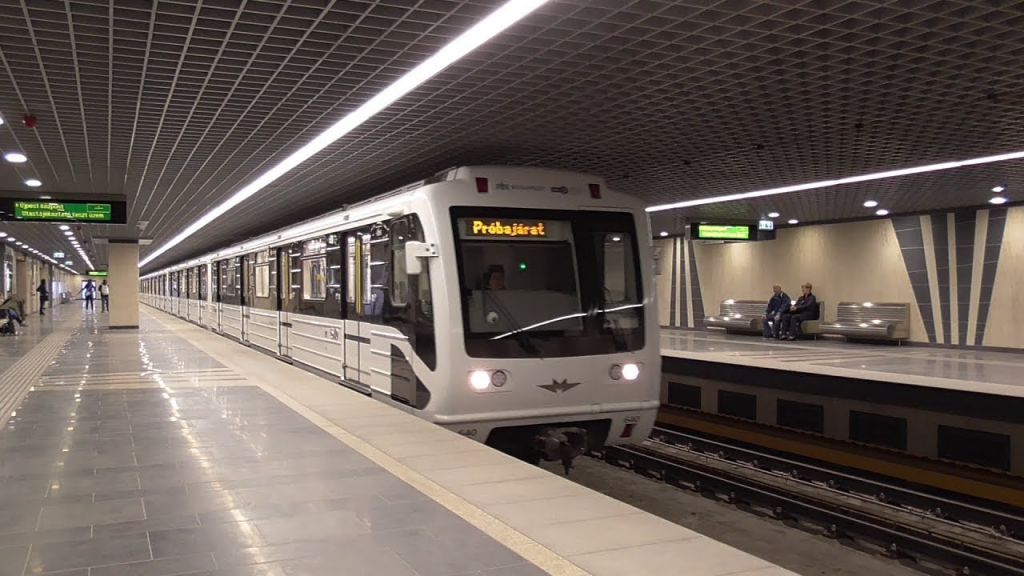
METRO
The Budapest Metro is the oldest electrified underground railway in mainland Europe - completed in 1896, it's only predecessor is the London Underground and for this reason. Since 2002 the original route of the M1 line from Vörösmarty tér to Széchenyi Fürdő has been listed as a UNESCO World Heritage Site.
Today, there are 4 lines on the system with the other 3 lines taking you from the main train stations and residential suburban areas into the city centre:
- M1 Mexikói Út - Vörösmarty Tér (Connects Szechenyi Baths, Heroes’ Square and Deák Ferenc Tér)
- M2 Budapest Déli Train Station and Keleti Train Station (International Services)
- M3 Kőbánya-Kispest Train Station (Domestic Services)
- M4 Keleti Train Station and Kelenfőld Train Station (International Services)
Useful Hint:
Metro Lines 1, 2 and 3 intersect at Déak Ferenc Tér. From here, you can pretty much reach anywhere you need on the Metro.

TRAM
As well as having one of the oldest Metro networks, Budapest also hosts one of the oldest Tram networks too - and one of the busiest! It is much more the beating heart of Budapest to locals than the Metro, with 100,000 more passengers annually.
If you are visiting Budapest, chances are you would only really need to look at the 4 or 6 metro lines which take you from Buda into downtown Pest 24hrs a day, 7 days a week (one of the stops is right outside the after party to the Boat Party!) however, make sure to check out Route 2 as well as it lazily meaders its way along the river bank from Jászai Mari tér, past the Parliament and on towards Liberty Bridge
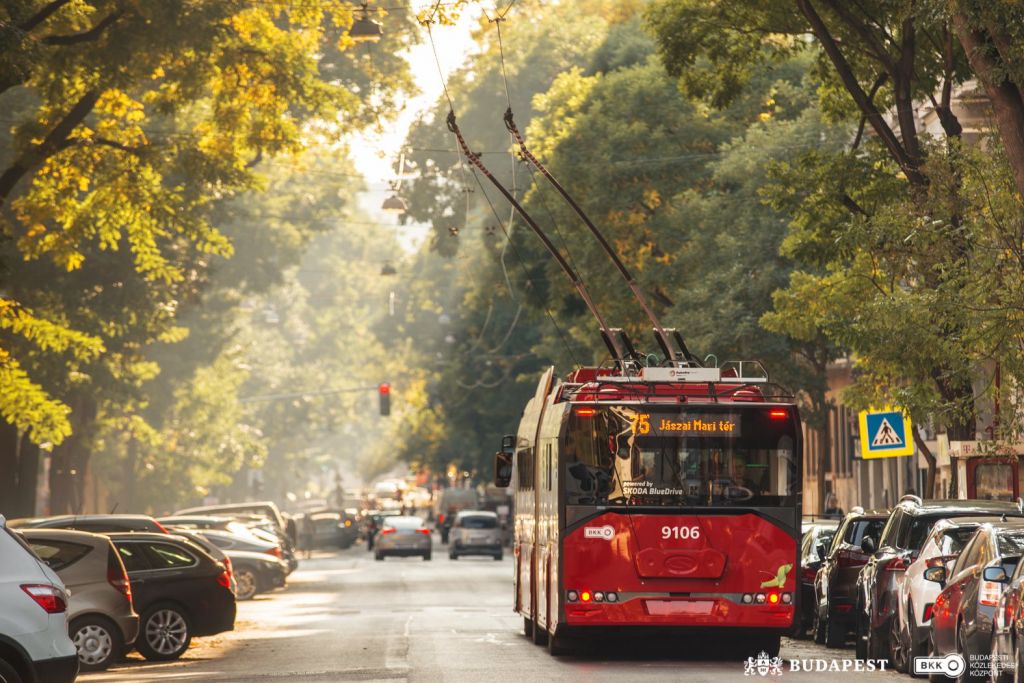
BUS and TROLLEY BUS
Budapest has over 200 bus routes running throughout the day and night. If you can’t find a Metro or Tram - there WILL be a bus! There is also the 100E that takes you right from Airport arrivals straight to Déak Ferenc Tér for 900HUF (~€2,50 / £2.25)
Budapest is also one of the homes to the curious Trolley Bus. A sort of Bus/Tram hybrid, the trollies are connected to overhead power cables. Better for the environment for sure, but are temperamental! You should take one for the experience and watch on as the driver has to get out and reconnect the vehicle’s power cables every so often ;o)
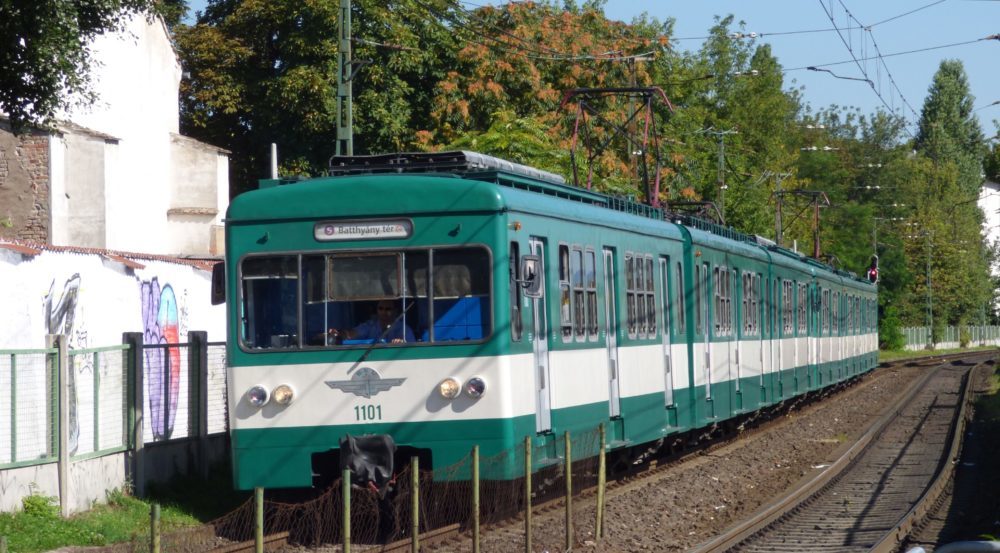
HÉV
The Budapest suburban light railway is also covered with your transport tickets, however if you are travelling further out of the city, you will need to purchase supplementary tickets, available at the station ticket machines.
Connecting to the M2 Metro line at Batthyány tér, you can change onto the HÉV for services to the nearby Roman ruins of Aquincum, to the quaint artist’s haven of Szentendre, or, from the other end of the M2 at Örs Vezér tér over to the baroque Royal Palace at Gődőllo.

BOAT
Riverboats have always played a huge part in the make-up of Budapest and it”s transport network continues to be helped by this industry.
BKK River Taxis operate between the Kopaszi Dam in the south up to Rómaifürdő in the north via Gellért Hill, MÚPA Palace of the arts and Margaret Island.
You can even get special boats that take you to the gates of Sziget Festival!
Tickets cost 750HUF (~€2,15 / £1.85)

TAXI
All official taxis in Budapest charge the same price per km – whether you order it or just get one off the street, every taxi has the following fare structure:
Base fare: 700 Ft ~€2,00 / £1.75
Distance Fee: 300 Ft/km ~€0,85 / £0.75
Waiting Fee: 75 Ft/minute ~€0,20 / £0.20
BEWARE!! There are many “fake” taxis driving around the city that will charge you much more, and then threaten you with violence if you don’t pay the fare but, they are somewhat easy to spot:
1. NEVER get into a taxi that doesn’t have a company logo on the top or on the car door (a sign
saying “TAXI” is not enough!)
2. Always make sure that the meter is on, and that it doesn’t show more than 700HUF when you
get in (unless you made them wait for you!).
3. If they are willing to negotiate a fixed price for the trip, don’t get in the car. Fixed pricing is
illegal and they are probably overcharging you a LOT.

FUNICULAR RAILWAY
Another second oldest for the city is its Funicular Railway up the hill from Széchenyi Bridge to Buda Castle. The first was built in Lyon, France in the early 1860s, and then Budapest inaugurated theirs in 1870.
Despite suffering heavy damage during World War II, it was rebuilt to the same design and reopened in 1986 where it continues to operate from 07:30 - 22:00 every day. Tickets cost 1,200HUF (~€3,50 / £3.00)

CHAIRLIFT
Speaking of NOT walking up big hills - why not also take a ride on the chairlift, or Libegő, up Janos Hill to arguably the most beautiful lookout over the city.
It takes a little getting used to, but once on it, the 15minute journey from Zugliget to Erzsébet Lookout Tower feels like flying! Tickets cost 1,000HUF (€2,85 / £2.50) for a single journey.

CHILDREN’S RAILWAY
Line 7 of the train network is indeed very different to the rest..!
Formally called the Pioneer Railway (harking back to its Communist Boy Scout beginnings) the Gyermekvasút stretches for 11km across the Buda hills and is almost completely run and maintained by children aged between 10 and 14. Only the drivers are adults!
TRANSPORT COMPANIES
BKK www.bkk.hu
BKV www.bkv.hu/
APPS
BOLT Taxi services (Similar to Uber)
BKK FUTÁR Public Transport Schedules, routes and info
Other articles

How to Get the Immunity Card or App in Hungary
Here’s a guide to everything we know about how to get a vaccination card/the app as an expat in Hungary!

Where to Rent a Car in Budapest
Ready to hit the road? This article will help you with renting a car in Budapest. Grab your license, credit card, and let's go!

Budapest Museum Guide
Hungary is home to plenty of enlightening museums. Check out the following list we’ve put together ofthe best art and non-art museums to visit when you’re in Budapest.


